
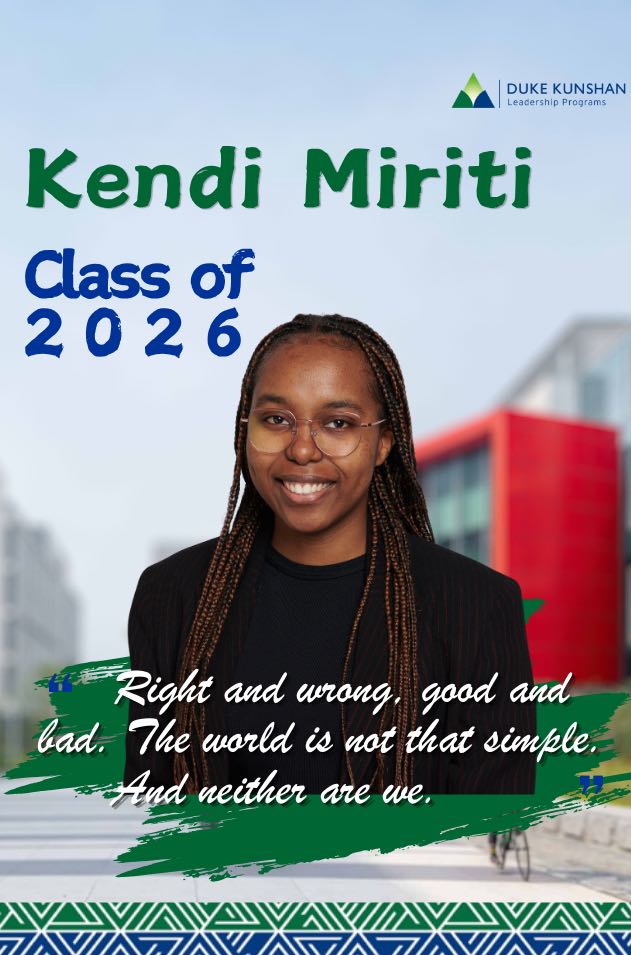
Many people enter university believing leadership means holding a title.
You become a club president. A committee chair. A student representative. You organize events, assign tasks, and sit in meetings. On paper, it looks like leadership.
But after arriving at Duke Kunshan University, Kendi Miriti began to realize that real leadership had very little to do with titles at all.
For her, leadership slowly became something much harder — and much more meaningful: the ability to move people.
Kendi, a graduating senior at DKU, has spent the last four years navigating leadership through student organizations, institutional advocacy, cultural community building, and cross-cultural dialogue. She served in the Student Leaders Board (SLB), co-founded the Association of African and Black Students (AABS), and became deeply involved in conversations surrounding belonging, diversity, and institutional change.
Looking back, she believes the biggest transformation was not learning how to manage people — but learning how organizations, communities, and human motivation actually work.
Leadership Was Not What She Thought It Was
When Kendi first arrived at DKU, she already had experience in student leadership from high school. But very quickly, she realized university leadership operated completely differently.
“In high school,” she recalled, “we were brought into leadership mostly because administration needed students to be in charge somehow.”
At the time, leadership often felt symbolic. Students participated, but rarely had the ability to shape decisions in meaningful ways.
Ironically, Kendi’s path to DKU itself had already begun with uncertainty. Before coming to China, she originally planned to study in the United States. During her gap year, she was simultaneously enrolled in engineering school in Kenya because, as she joked during the interview, “my parents didn’t actually believe I would get admitted abroad.”
She still remembers receiving her Cornell early decision rejection in the middle of the night. “I cried and called my mom at like 3am,” she recalled. Her mother’s response was brutally honest: “I told you it wouldn’t work.”
But not long afterward, a friend sent her information about DKU. At first, she was simply curious: China, Duke, a globally focused campus, opportunities to study abroad. Then another thought emerged: “If I study in the US, I experience one country. But if I come to DKU, I experience two.”
Eventually, after receiving multiple admission offers, she sent all of them into the family group chat and simply announced: “I choose this one.”
University changed that perspective entirely.
At DKU, Kendi discovered that leadership was not just about coordinating students. It also involved working with administrators, navigating institutional systems, and advocating for larger change.
I realized leadership actually means influencing decisions,” she said. “And not just from a student level.”
But even more importantly, she began thinking about leadership from a new angle: not controlling people, but moving people.
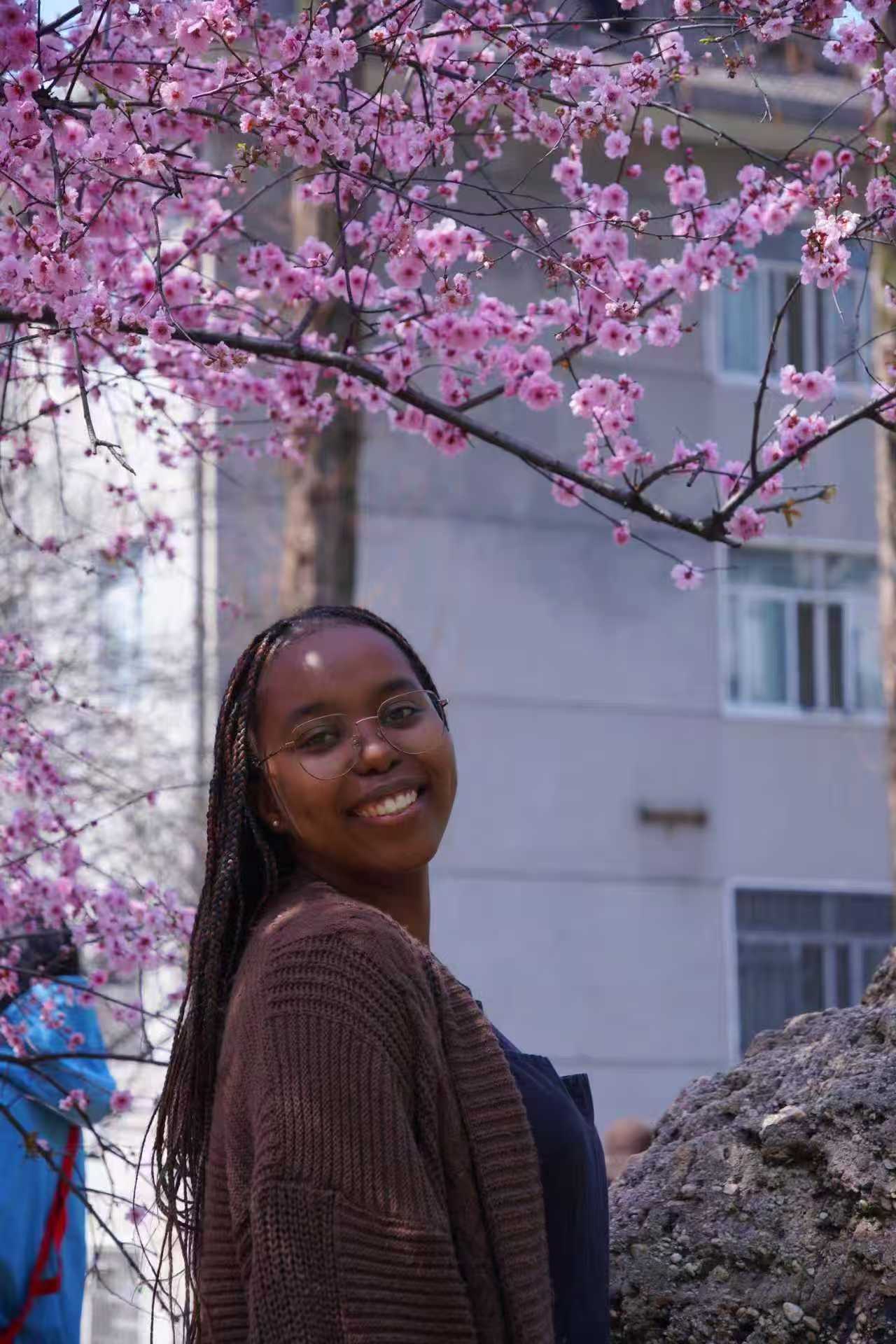
DKU’s uniquely international environment made this challenge especially visible. Students arrived from different countries, educational systems, cultures, and personal experiences. Everyone interpreted problems differently. Everyone carried different assumptions about how communities should function.
And in that environment, Kendi started asking herself a difficult question:
How do you bring people toward a shared direction when everyone sees the world differently?
“What I’m thinking about,” she explained, “is how we can cultivate leadership that moves people to see the same vision in the same way — or at least come together to solve problems collectively.”
For her, this became the real challenge of leadership:
not authority, but alignment.
She Did Not Pretend to Have the Answer
One of the most striking parts of Kendi’s interview was how often she admitted uncertainty.
When asked how she personally learned to “move people,” her answer was immediate:
“I genuinely don’t know how people do it.”
Instead of presenting herself as someone who had already mastered leadership, Kendi described herself as an observer — someone constantly studying how influential people create trust, energy, and collective direction.
“I am watching people who do it, and I’m trying to see how they do it.”
She noticed that truly influential leaders often possess a kind of charisma that allows others to emotionally connect with a shared vision. But she also emphasized that leadership cannot simply be copied from one context to another.
What works in one company, country, or organization may completely fail somewhere else.
And at DKU, that complexity becomes even greater because the campus itself is deeply multicultural.
“DKU is not a monocultural place,” she said. “People come from different places, different perspectives, different opinions.” Sometimes those differences appeared in surprisingly small moments — the way people approached teamwork, the way they handled disagreement, even what “being respectful” meant in conversation. What felt completely normal to one person could feel uncomfortable or confusing to someone else.
Kendi realized that leadership in a place like DKU often required more patience and interpretation than certainty. Before solving problems, people first needed to understand how differently others might be seeing the exact same situation.
That diversity, while valuable, also means leadership becomes more difficult. A leader cannot assume everyone shares the same worldview, communication style, or expectations.
So rather than trying to imitate others directly, Kendi focused on learning principles:
How do people create belonging?How do they build trust?How do they make others genuinely care?
The Leader Who Changed the Way She Thought
When discussing leadership role models, Kendi brought up someone many DKU students may never have heard of:
Bob Collymore, the former CEO of Safaricom, Kenya’s largest telecommunications company.
But for Kendi, Bob represented something far beyond corporate success.
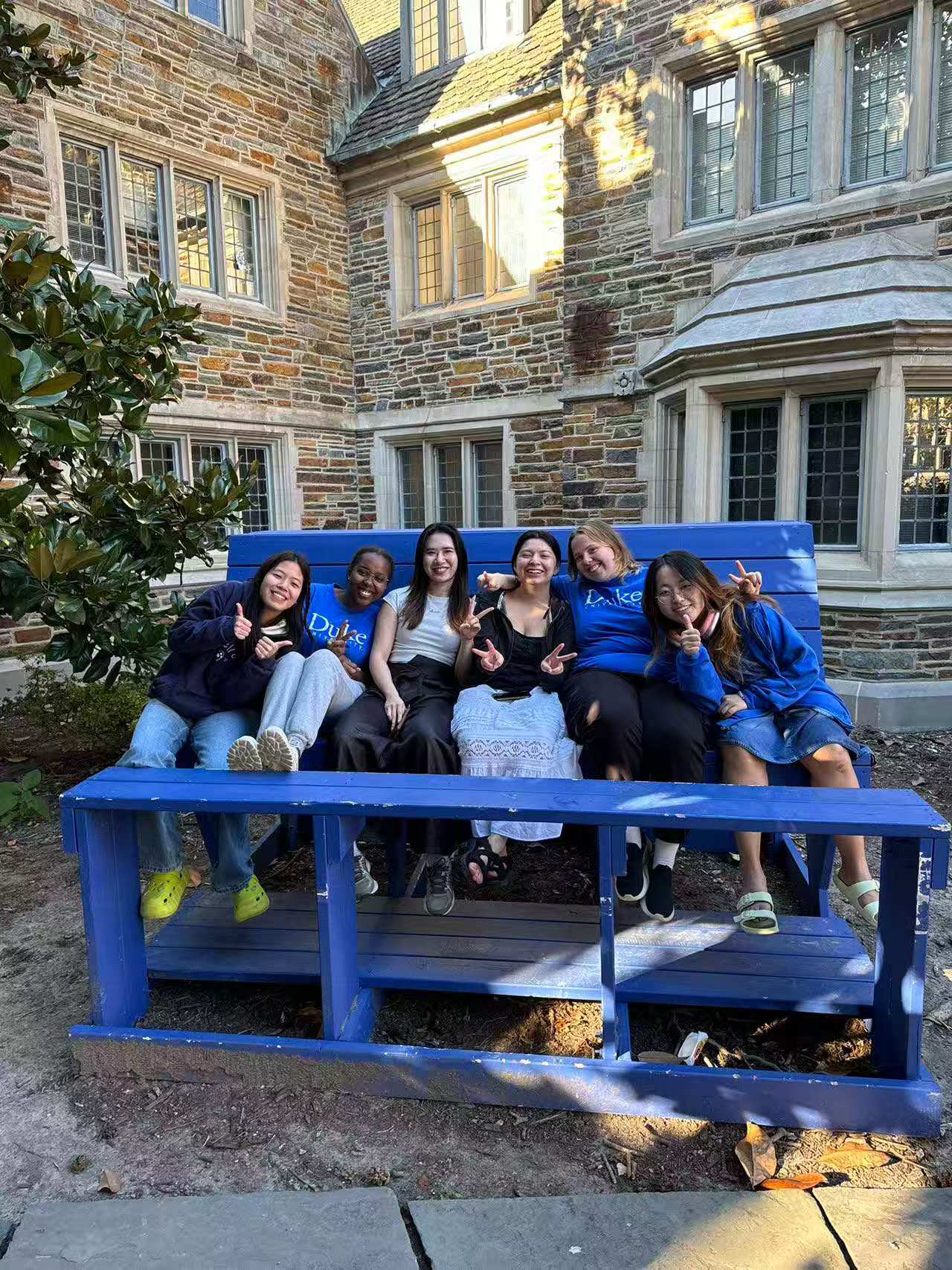
She described how he was able to unite not only employees inside the company, but also ordinary citizens across the country. People trusted the company because they trusted him. Employees felt connected to their work because he made them feel seen.
“The day Bob died,” Kendi recalled, “people genuinely felt like all of that died with him.”
What fascinated her most was not his authority as a CEO, but his ability to bridge hierarchy.
“He had this ability to be the CEO ‘up there,’ but also bring himself down to everyone else.”
That observation fundamentally shaped how Kendi began understanding leadership herself.
Great leadership, she realized, is not simply about managing tasks efficiently.
It is about understanding people:
what they need,what they care about,what makes sense to them,and how to guide them toward a shared direction.
SLB Taught Her How Organizations Actually Work
For many students, organizations appear simple from the outside.
People often assume that if an institution does not make a certain change, it simply “does not want to.” But through Student Leaders Board (SLB), Kendi began seeing how much more complicated organizations actually are.
“Coming into SLB,” she said, “I realized I didn’t actually understand how DKU worked.”
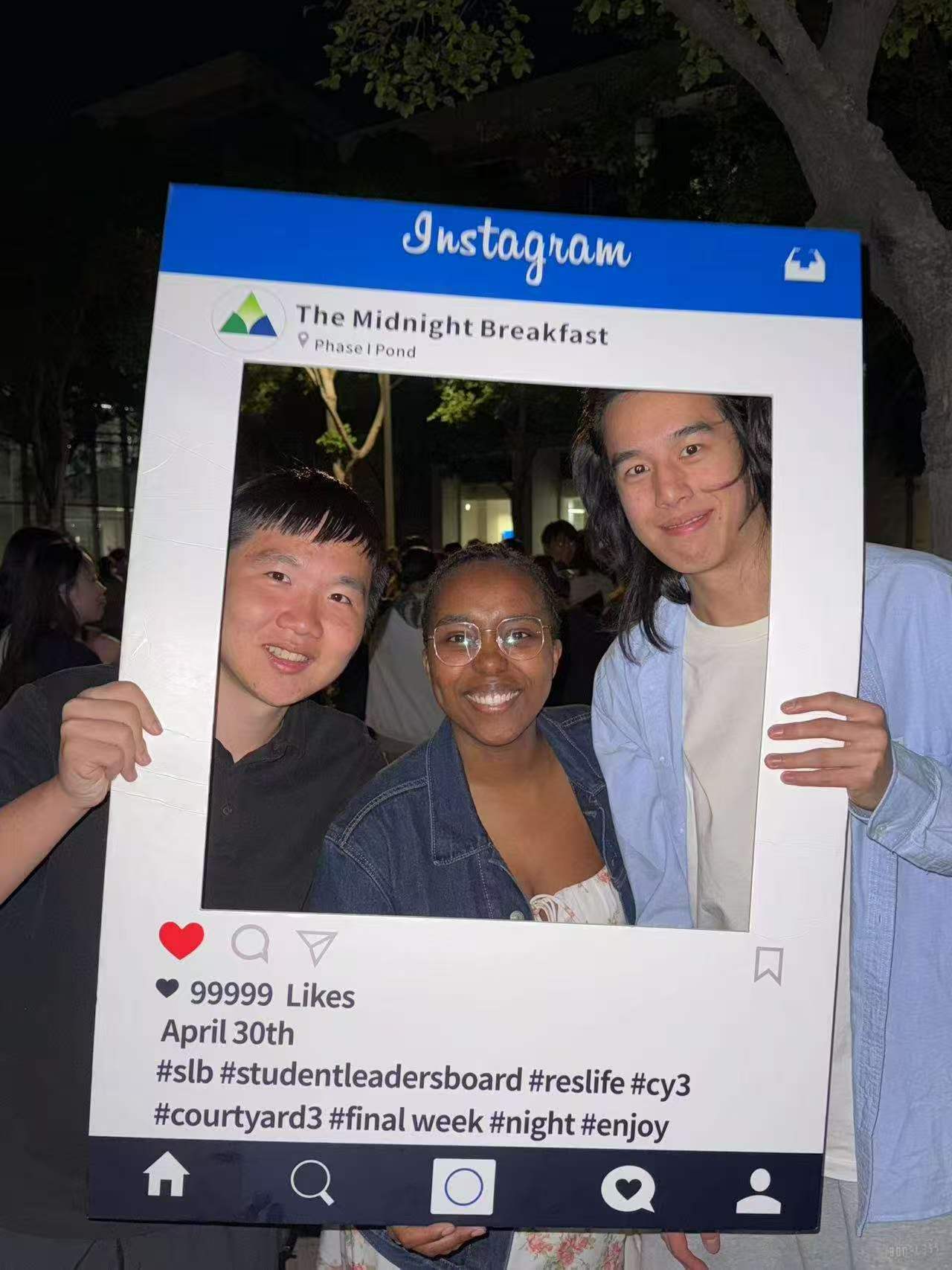
Serving in SLB gave her a new perspective on institutional structures:
why some processes move slowly,why certain student expectations are difficult to fulfill,and how decisions are shaped by limitations that students may not immediately see.
She recalled gradually realizing that many ideas students considered “simple” often involved layers of coordination invisible from the outside — budget approvals, multiple departments, policy concerns, long timelines, or institutional risk considerations.
At first, this frustrated her. Like many students, she sometimes assumed that if something was not changing, it was simply because the institution did not care enough. But over time, SLB forced her to see organizations less emotionally and more structurally.
“Once you actually sit inside those conversations,” she explained, “you realize how many moving parts exist behind even very small decisions.”
At the same time, she also started thinking differently about leadership transitions.
Every year, student organizations change. Leaders graduate. New students join. Priorities evolve.
So what should remain?
For Kendi, organizations like SLB should continue evolving — but still remain connected to a recognizable core identity.
“If you look at what each cohort does,” she explained, “it should still trace back to something foundational.”
That foundation, in her view, is not necessarily a fixed set of activities. Instead, it is the image and trust the organization builds in people’s minds.
Do students see SLB as:an organization they can rely on?a group that advocates for students?a place where initiatives happen?
Those underlying values, she believes, should remain recognizable even as each generation interprets them differently.
More importantly, SLB taught her something she now applies far beyond university life:
before trying to change an organization, you first need to understand how it functions.
“Once you understand the structure,” she said, “you understand what can change, what cannot change, and what you can strategically navigate around.”
One of the Hardest Lessons: Letting People Fail
As Kendi grew into leadership roles, she also encountered a challenge she did not expect:
learning when not to intervene.
She admitted that her instinct was often to immediately evaluate ideas and point out flaws.
“If something sounded bad immediately in my head,” she said, “I would think: ‘That’s not going to work.’”
But over time, she realized something important:
sometimes people simply struggle to explain their ideas clearly.
And sometimes, even imperfect ideas matter deeply to the people proposing them.
So she started asking herself a different question:
Should I stop this idea — or should I let people try?
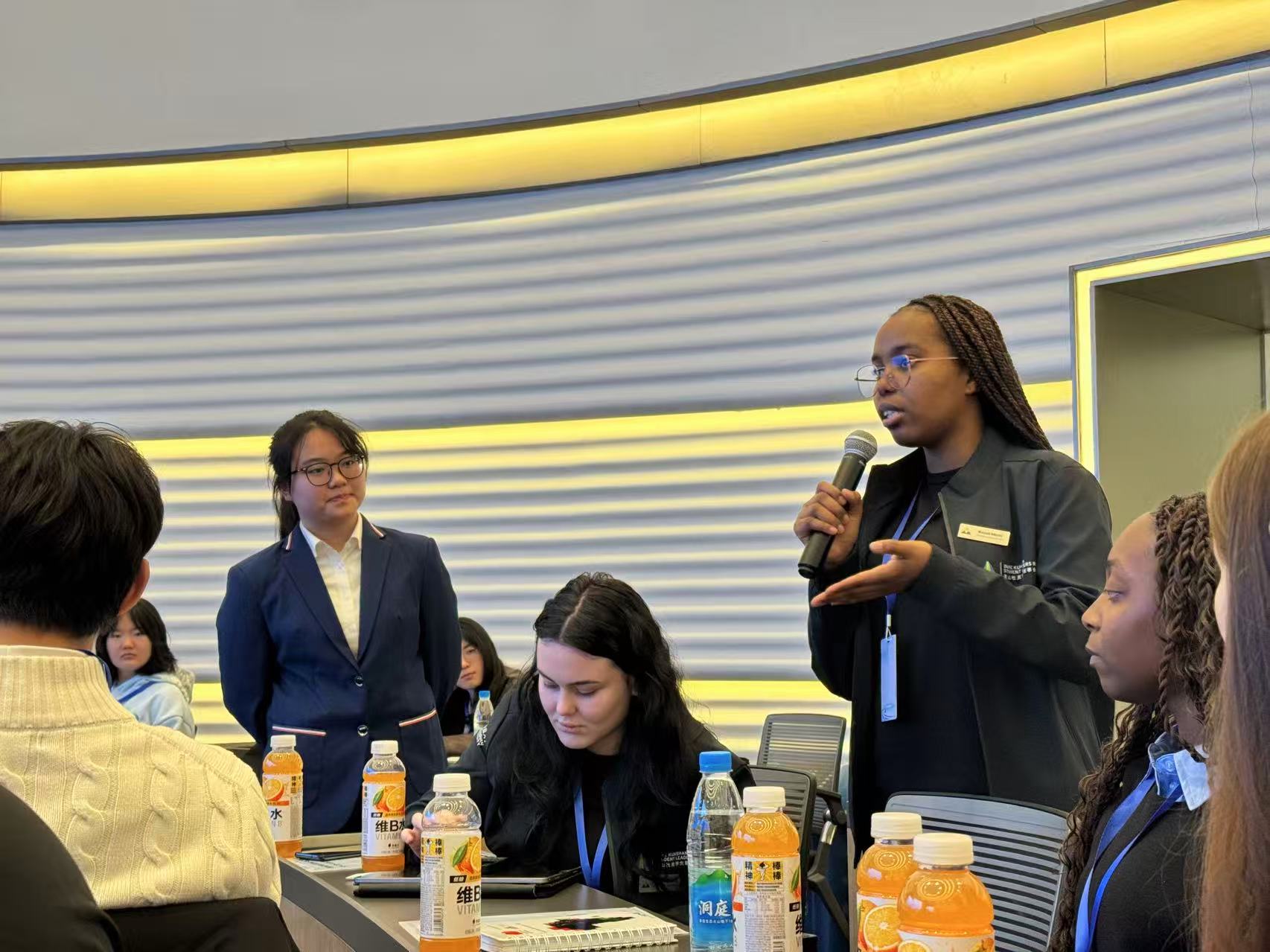
That shift was difficult.
Growing up, Kendi had been surrounded by environments where people quickly criticized unrealistic ideas. Naturally, she developed the habit of immediately judging whether something would succeed.
But leadership gradually taught her that not every lesson should be prevented in advance.
Sometimes people need:space to experiment,space to fail,and space to learn through experience themselves.
“This is not my project,” she realized. “This is someone else’s idea.”
Learning to step back became just as important as learning to lead.
Building Community Far From Home
If SLB helped Kendi understand institutions, AABS helped her understand belonging.
During her sophomore year, Kendi and several others founded the Association of African and Black Students (AABS).
“And honestly,” she said, “AABS will forever be my pride and joy.”
When she first arrived at DKU, there were very few Black students or staff members on campus. Over time, the community grew — but there still was not a clear space where African and Black students could fully gather as a community.
So they created one.
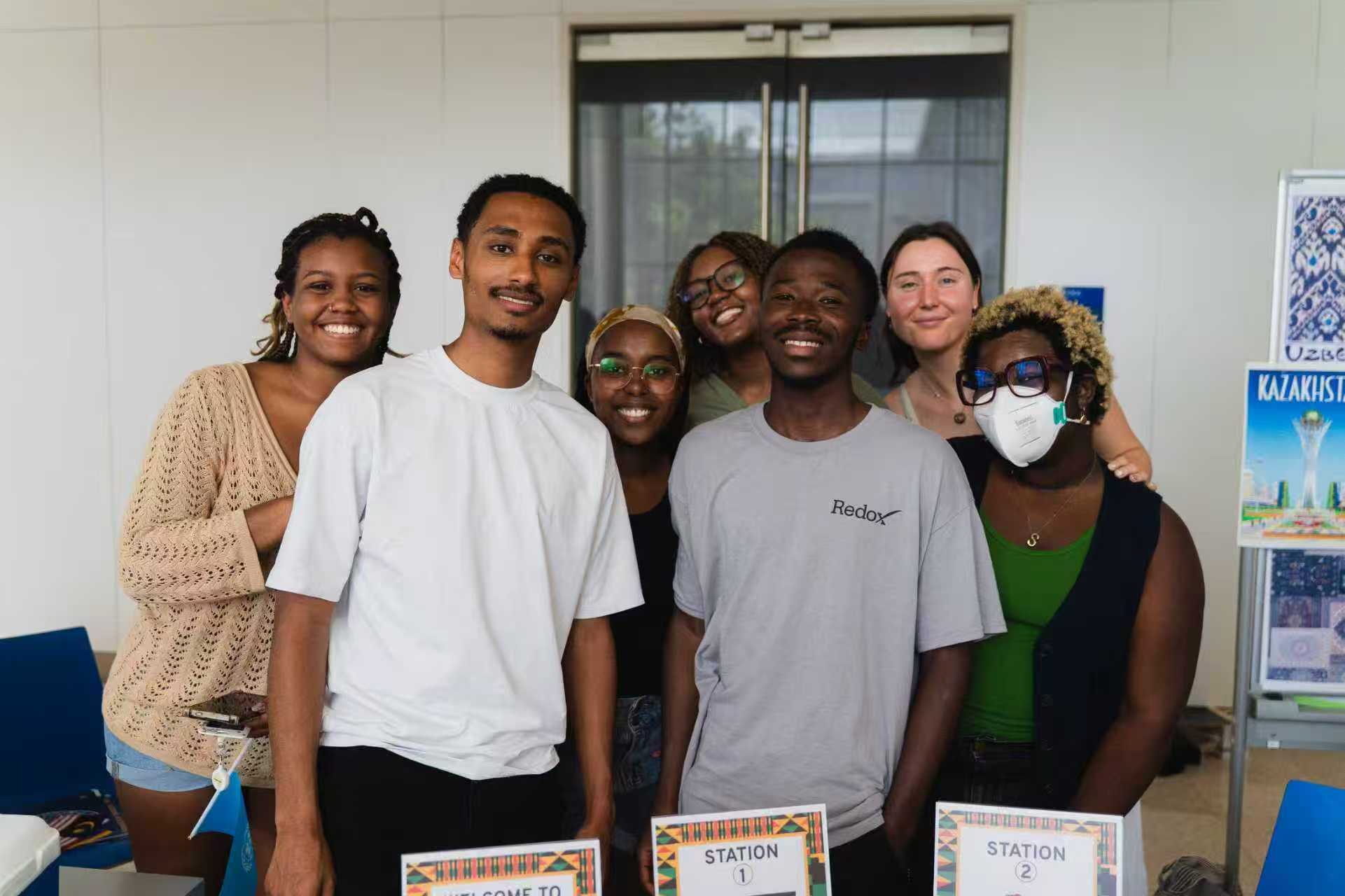
Some of the moments she remembers most vividly were not the largest events, but ordinary evenings spent together. Around shared meals, conversations drifted from childhood memories to family traditions. People laughed at the familiar phrases their parents used, recognized the same lessons repeated by teachers thousands of miles apart, and discovered unexpected similarities in the foods and customs they had always thought were uniquely their own.
In those moments, difference did not disappear. Instead, it became something that revealed connection.
But even within AABS itself, diversity remained complex.
“Kenyans, Jamaicans, Nigerians, South Africans,” Kendi explained. “Different cultures, different backgrounds, different languages.”
The challenge became:
How do you create shared community while still respecting difference?
For Kendi, the answer was not large-scale programming or formal institutional language.
It was much simpler:cooking together,watching movies,playing games,and simply existing together.
Those ordinary moments slowly created a sense of belonging that many students had previously lacked.
Diversity Is Not Just an Institutional Responsibility
Kendi also spoke extensively about cultural diversity at DKU — and her perspective was nuanced.
She acknowledged that many students arrive at DKU with limited previous exposure to communities different from their own. Some adapt quickly. Others struggle.
But she believes meaningful inclusion begins with individual responsibility.
“The internet is free,” she said. “Books exist. Documentaries exist. People exist.”
For her, genuine cross-cultural understanding starts with intellectual humility:accepting that your worldview is incomplete,accepting that you will sometimes misunderstand things,and being willing to learn respectfully.
Even the way questions are asked matters.
Instead of approaching conversations aggressively, she suggested:
“Hey, I read something and I’m not sure if I understood it correctly — could I ask you about it?”
That approach creates dialogue rather than defensiveness.
At the institutional level, she also reflected on the limitations of many diversity events. Cultural expos, performances, and food festivals are enjoyable, but they do not automatically create deeper understanding.
People may attend for entertainment without genuinely engaging with the cultures represented.
Ultimately, Kendi believes inclusion cannot rely entirely on institutions.
“If individuals genuinely want to learn and respect others,” she said, “then institutional efforts become meaningful.”
Scholarship Changed the Way She Understood Responsibility
When Kendi talked about scholarships, she did not describe them simply as financial support.
Instead, she described a realization that fundamentally changed the way she viewed education, opportunity, and responsibility.
“I think the biggest realization,” she said, “was understanding that there are people willing to invest their hard-earned money into students they’ve never met.”
That idea stayed with her.
For Kendi, the realization felt deeply personal because she knew how uncertain studying abroad had once seemed. There had been a time when even the possibility of attending university overseas felt fragile and unrealistic.
So when strangers — donors, institutions, people she would likely never meet — chose to invest in her future anyway, she began seeing scholarships not simply as funding, but as trust.
Behind every scholarship, she realized, there are people — donors, families, institutions — choosing to support someone they may never personally know, simply because they believe education matters. To Kendi, that realization carried emotional weight far beyond tuition itself.
“It made me think very differently about access,” she explained. “Someone decided that I deserved an opportunity, even though they didn’t know me personally.”
And for her, receiving that opportunity also created responsibility.
Rather than seeing scholarship support as something purely individual — a personal achievement or reward — Kendi gradually began thinking about what it meant to help create access for others as well.
That mindset started shaping many of the things she chose to do outside the classroom.
She began helping high school students apply abroad, reading personal statements, sharing Common App resources, and introducing students to universities offering strong financial aid and full scholarships.
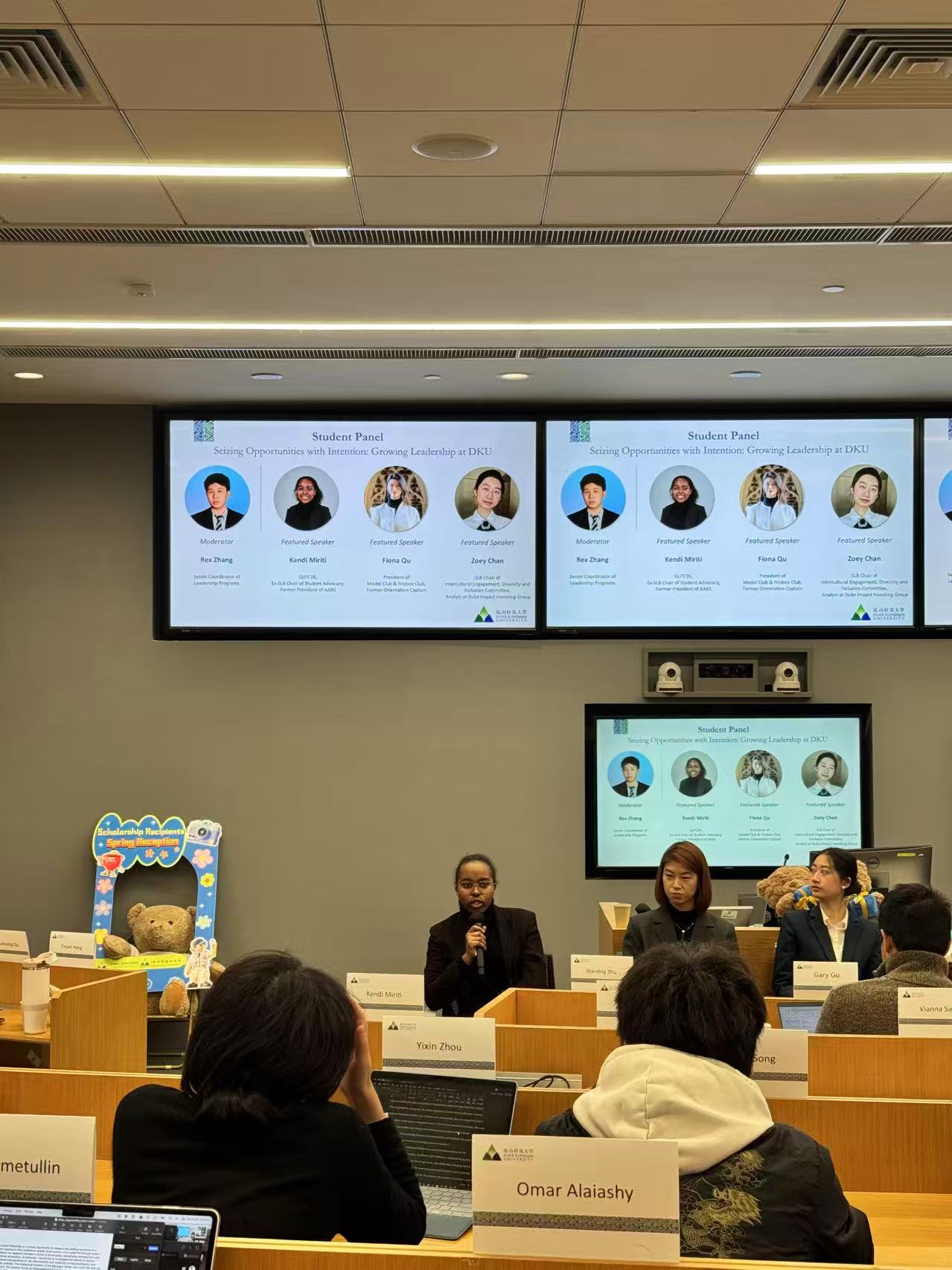
Because in her view, access often determines what people are even able to imagine for themselves.
“If I was given access,” she said, “then how do I help create access for other people too?”
At the same time, scholarships also removed what she described as many “invisible burdens.”
While some of her friends studying elsewhere constantly worried about balancing academics with work-study jobs and financial pressure, Kendi found herself with something equally valuable: space.
Space to participate in student organizations.Space to join SLB.Space to build AABS.Space to think beyond survival.
And that freedom, she believes, changed the trajectory of her university experience.
“So then the question became,” she reflected, “‘If I don’t have to spend all my energy worrying about survival, what meaningful things can I focus on instead?’”
Looking back, Kendi believes scholarships gave her much more than educational access.
They changed how she understood community, responsibility, and the idea that opportunities become most meaningful when they are shared forward.
Why She Still Believes Human Thinking Matters in the Age of AI
Toward the end of the conversation, Kendi reflected on another topic shaping university life today: AI.
As generative AI tools become increasingly common among students, she worries about a growing tendency to outsource thinking itself.
“If I use ChatGPT to summarize every reading,” she asked, “then what exactly did I learn?”
For her, the issue is not whether AI is useful. In fact, she believes AI can be both “extremely good and extremely bad” depending on how people use it.
The deeper concern is whether students continue developing:critical thinking,judgment,contextual understanding,and independent opinions.
“AI can give answers,” she said. “But what do you think?”
That, in her view, remains the essential question.
Technology may continue advancing rapidly, but leadership, collaboration, empathy, and human judgment still require something machines cannot fully replicate:
the ability to understand people and navigate complexity.
Ending
Looking back on her four years at DKU, Kendi does not see leadership as a process of “gaining power.”
Instead, to her, leadership is a gradual process of understanding people: understanding how communities are formed, how organizations function, how trust is built, and how people from vastly different backgrounds can still move toward the same goal together.
From learning about institutional systems and organizational structures through SLB, to building a sense of belonging through AABS, and later reflecting on multiculturalism, AI, and the “access” created through scholarships, her growth has consistently revolved around one central question:
Leadership is never about being the loudest person in the room.
It is about creating an environment where people are willing to move forward together.
Sometimes, that “push” happens through long and complicated conversations between SLB and university administration. Sometimes, it emerges in difficult discussions about culture, identity, and belonging. And sometimes, it exists in the simplest moments—cooking together, listening sincerely, or helping another student believe for the first time that they, too, might have access to a bigger world.
Her scholarship experiences also gave Kendi another understanding of leadership.
She gradually realized that opportunity is not simply a reward earned through individual effort. More often, it means that someone is willing to invest their resources, trust, and expectations in a young person they may not even know personally.
And once someone truly receives such an opportunity, the question is no longer merely: “How far can I go?” But rather: “Can I also create opportunities for others?”
Perhaps this is one of the hardest lessons a university classroom can truly teach.
It cannot be learned through coursework alone, nor obtained through titles or positions. Instead, it is a kind of ability slowly formed through real life— through relationships with others, through listening and disagreement, through failure and growth, and through gradually learning how to move forward together with people around you.
Student Leader Stories
Student Leader Stories is a storytelling series launched by DKU Leadership Programs, featuring the authentic growth journeys of student leaders at Duke Kunshan University. We believe that leadership has no single definition—it is found in every moment of taking initiative, collaborating with others, and stepping beyond one’s comfort zone.
Through these stories, we hope to capture how DKU students discover themselves, influence others, and create positive change. More importantly, we invite our community to reflect on a fundamental question: What does leadership truly mean?
Follow DKU Leadership Programs to discover more inspiring leadership stories from the DKU community.